


We planted beans and only one sprouted. We planted pumpkin seeds that never sprouted. Bruce faithfully watered these seeds thinking eventually they would sprout. Today, we searched the ground for these defective beans and seeds. The beans and seeds never sprouted because the crows enjoyed a nice meal of beans and pumpkin seeds after watching Bruce plant them. We experienced this exact same thing when we planted the corn for the first time over a year ago. You would think we would learn! (Because the crows learned that Bruce puts their dinner in a nice little pile of dirt). So, you might ask, why did they miss the last bean that sprouted? The last pile of dirt had two beans in the pile. The Crows learned that we put one bean in each pile, so the crow did not look for the second bean and this was the only bean that sprouted. We will replant this weekend, but this time we will use bird netting as soon as we plant. Our son Bruce IV has been telling us for years that crows were intelligent. He was correct.


Something to know about crows: The American Crow (Corvus brachyrhynchos) is a large and intelligent black bird with an average lifespan of 13 years. This bird is thought to be one of the most intelligent birds that lives. Crows have a propensity for using tools and solving complex problems. Studies have proven that crows remember human faces (for up to five years), and can tell the difference between people who were kind to them and people who were unkind to them. Crows are also capable of passing this information on to the next generation. The crow is a sociable bird when not nesting. Crows will eat almost anything (insects, small animals, fruit, garbage, and seeds), and therein lies our problem with crows. So far, the crows have enjoyed the corn, beans, and pumpkin seeds that we planted. Too bad we didn’t learn as fast as a crow!
What you don’t know CAN hurt you: In front of the farm gates, there was a plant that we originally thought was sulfur cosmos. However, this plant did not flower. “Picture This” app identified this plant as Ragweed. There are about 40 species of Ragweed (family is Asteraceae) and all should be avoided, even if you are not allergic to the pollen.


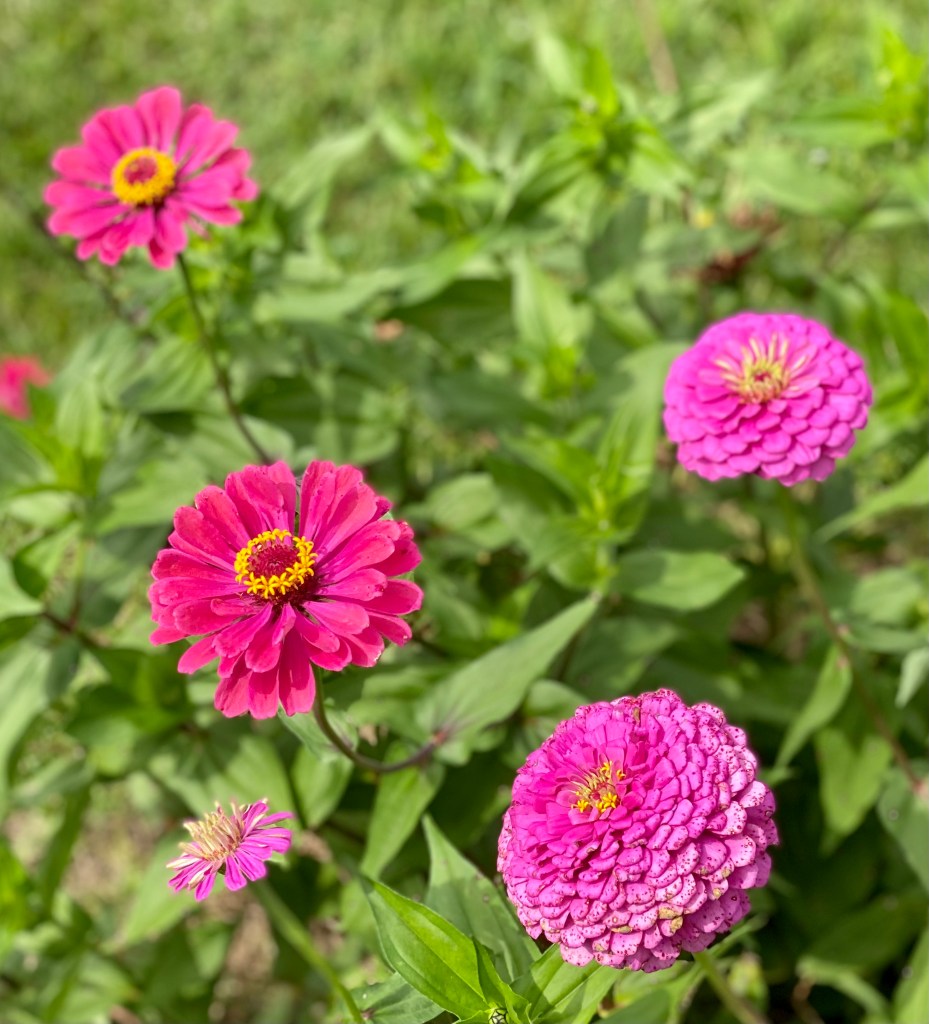
The Ragweed (pictured above) was growing in such abundance, that I decided to pull it to give the zinnias more room. We have all heard of hay fever caused by Ragweed, but did you know that Ragweed also causes skin irritation? Even though I wore gloves, the plant caused whelps above the glove line.


In addition to ragweed, there are 10 other plants that commonly cause skin irritation. You may want to commit these 11 plants to memory!
Poison ivy (first picture below) and Poison oak (second picture below) both contain Urushiol oil (a toxin which irritates the skin). Both plants have three leaves in a cluster and both usually grow as a vine.


Poison Sumac (picture below) is a tall shrub with more Urushiol oil than Poison Ivy or poison Oak. This plant has oblong leaves, greenish-yellow flowers and grey berries. Inhaling poison sumac smoke can be life-threatening

Both Stinging Nettle (1st and second picture below) and Wood Nettle (pictures 3 and 4 below) plants have hairs covering the plant. These hairs cause a sharp pain, numbness, and swelling upon contact. The pain from these plants usually lasts for a day, so you should definitely learn to identify these plants.


Giant Hogweed is an invasive species which is more common in the Northeastern and Western states. It is a large plant with clusters of white flower heads. The toxin is activated by the sun and may cause blisters, burns, and permanent scarring.

Wild Parsnip: also emits a sap that will irritate your skin when exposed to sunlight. The reaction on the skin can cause blisters. If you handle parsnip, you should wash your hands thoroughly.

Baby’s breath, often used in flower arrangements, usually causes no problem when alive. However, the dried form may cause some irritation to the skin. Personally, I have never had a problem with dried baby’s breath, but some people, who handle the dried baby’s breath often, do have a problem.

Leadwort or Plumbago is common in many gardens. Handling this flower with bare hands can also cause skin irritation. I have plumbago in my yard, but never thought to cut this flower. It also goes in the category of “look, but don’t touch”.

Hope you learned something new today! Please share this blog with your friends. (CCPygmygoasts.com)