


Parasitic worms- Goats and Deer
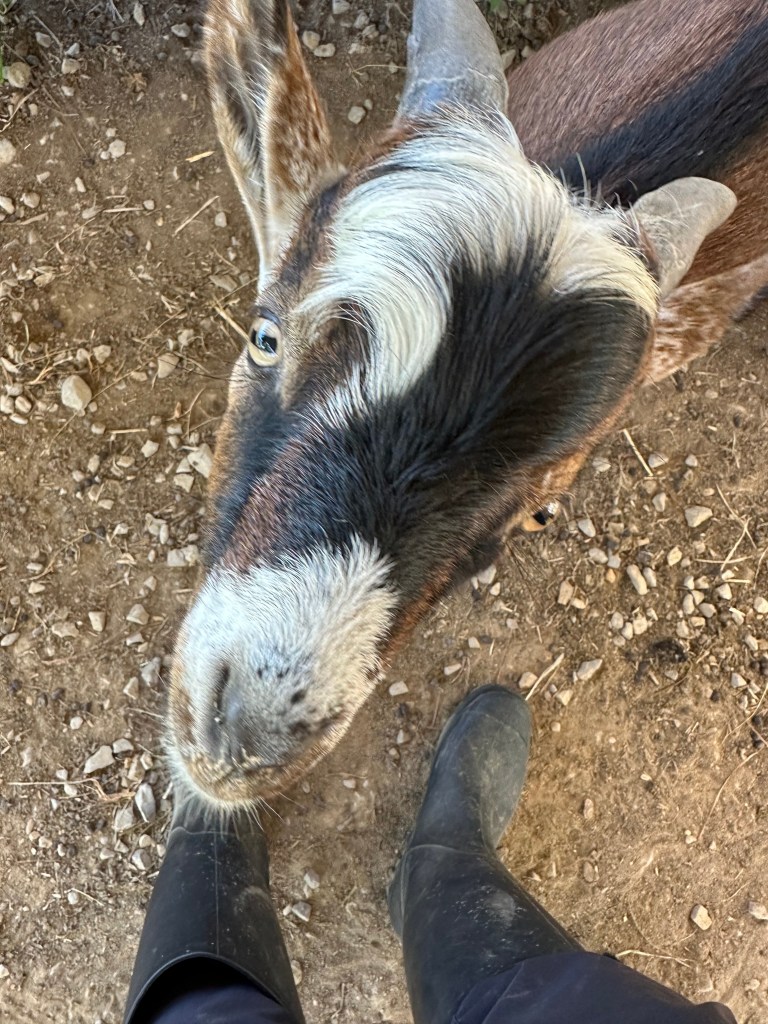
There are many theories on the length of the grass and pasture rotation to assist the goats in avoiding problems with parasitic worms. With the persistent drought, we did not realize our problem soon enough. Remember the deer (from previous blog) that had lumpy jaw from the nematodes? The drought increases the problem of deer being infected with nematodes. This drought also affects our goats. The goats eat the short grass like the deer and expose themselves to the parasites. After April got sick, we realized our errors. We are now attempting to rotate the pastures to help resolve the problem. Unfortunately, April did not make it through the night. I should have put her to sleep when the vet said that her chances were slim, but I had trouble making that decision. Next time, I will use my head instead of my heart.
Bees and Hummingbirds
Below: Feeding humming birds in our area causes a problem with bees. The bees enjoy the free sugar water as much as the humming birds and sometimes monopolize the feeders.
Although it is best for the bees to get their nectar from nature, at times of drought, it is sometimes necessary to supplement the bees to get them off of the hummingbird feeders. One solution to this problem is using yellow bee feeders. The sugar water solution used in the bee feeder has to have more sugar than the solution used in the hummingbird feeder (hummingbird feeder is 1 part sugar to 4 parts water). The recipe for bees is usually 1:1 ( 1 C water to 1 C sugar), however, in distracting the bees from the hummingbird feeders, it is just important to make the bee solution stronger than the hummingbird solution.


Butterfly life cycle
Look at the video below. The butterflies love our plants. Do you see the orange butterfly? That is a Gulf fritillary butterfly. That specific butterfly lays eggs that hatch into an orange larvae or caterpillar. The caterpillar loves the Passion flower. The video shows the passion flower leaves that have been eaten by this orange caterpillars after they hatched from eggs. The exoskeleton of this caterpillar will be shed several times in the process because it cannot expand. In the video below, you can even see a small caterpillar still on the underside of a passion flower leaf. Despite the ugly spines, this caterpillar does not sting. The last portion of the video is a caterpillar searching for a place to form its chrysalis where it goes into its pupa stage and transforms into a butterfly to start the life cycle again.
Science TIP: We often hear that we should be carful around caterpillars with spines. The truth is that most caterpillars from butterflies DO NOT STING. However, caterpillars from some moth species Definitely STING. Unless you know the difference, we suggest you obey the rule which is: “LOOK, BUT DON’T TOUCH”.
Please tell your friends about this blog if you learned anything or just enjoyed the pictures and videos!