


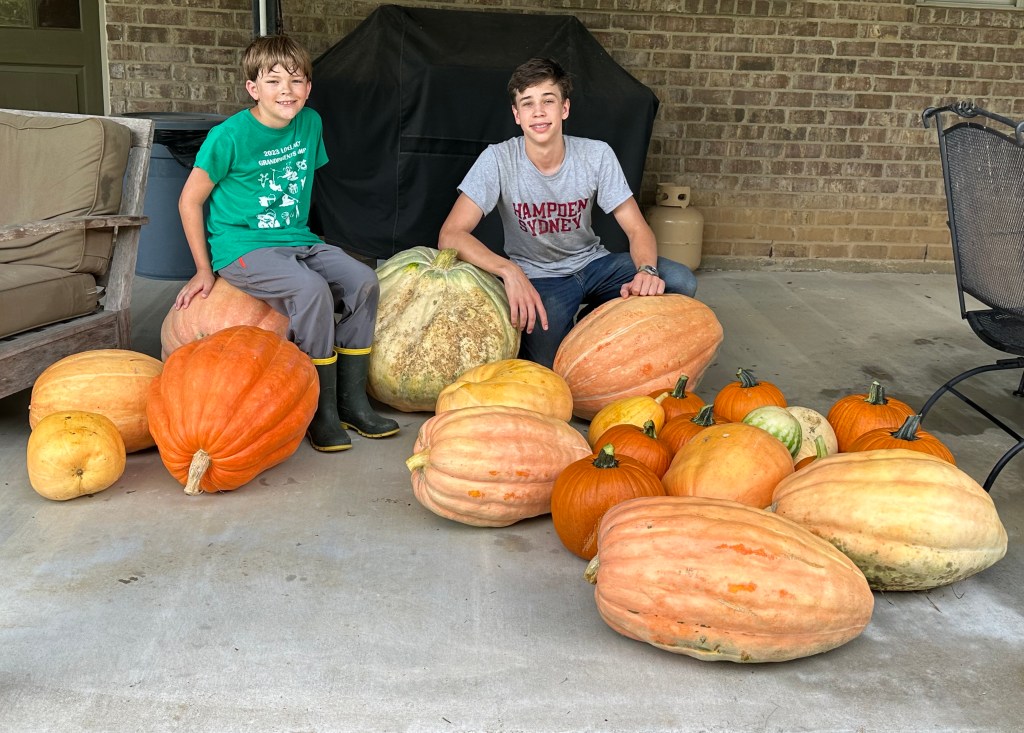
Oh my heavens! Look how fast the pumpkins are growing. They have doubled in size in three days. Since size is hard to determine, I put my fist next to the pumpkins. In the second picture, the pumpkin was the size of a grapefruit (or the same size as the pumpkin in the first picture) just three days ago. The first picture was the same size as the third picture just 3 days ago. The yellow pumpkins will be the larger pumpkins (up to 2000 pounds) and the green pumpkin, which has also doubled in size in three days, will hopefully be much smaller. Notice the leaves of the bushes. The pointed leaf with big indentions belong to the plant which produces the smaller pumpkins. The heart shaped leaf belongs to the yellow or larger variety of pumpkins.


Flip through the slide show below: The corn has tassels and the silks are showing on the future ears of corn. Remember that each silk must be pollinated in order to form a kernel of corn, so it is important that the wind, or the bees, or butterflies or something cause the pollen from the tassels to land on each and every silk that is now showing. Next time you bite into an ear of corn, check to see if there are any gaps in the kernels. If so, a bee or a butterfly messed up in the pollination process.


Pests: Deer, rabbits, insects, and mice all like pumpkin vines and pumpkins, but who knew we had to worry about moles (Tiny mice-like creatures with poor sight who tunnel underground to find worms). Moles do not eat the plant or the roots of the pumpkin, but can disturb the roots, thus killing the plant. The dirt displaced by the mole while tunneling forms a ridge above ground. Follow the ridge of dirt from one pumpkin to the next in the pictures below.


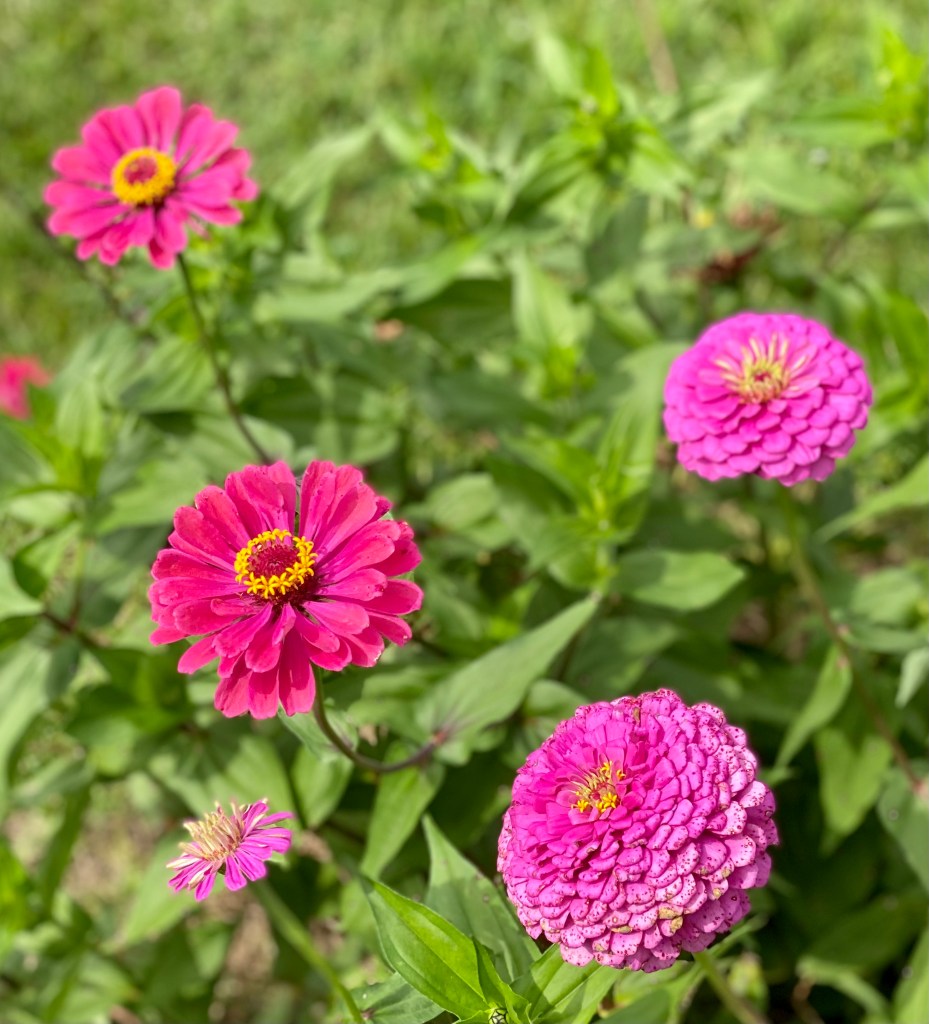
Dahlias (slide show below) are normally grown from tubers, however, like most flowering plants, Dahlias also form seeds. Once the flower is pollinated, the flower wilts and a seed pod forms. The seed pod should be allowed to dry on the vine. After drying, you cut the pod and harvest the seeds for the next spring. Flip through the slideshow below. Slides 1-4 are Dahlia flowers. The 5th and 6th slides are pictures of Dahlia seed pods. These particular pods just formed and have not dried yet. Slides 7-13 are different colors of Zinnea flowers. Slide 14 is the flower on a Butterfly plant.


HERBS AND FLOWERS: The Basil is thriving and ready to give up a few leaves for pesto. The two pictures on the right are the zinnia seeds that Merce gave as a birthday gift. They are so close together that some plants will need relocating shortly. The seeds were extremely tiny and mixed with fertilizer. We did not realize that we should have spread them more sparingly.
FISHING UPDATE: The crew visiting Grand Isle, Louisiana for a LONG weekend sent pictures. They limited out on their fishing trip this morning.

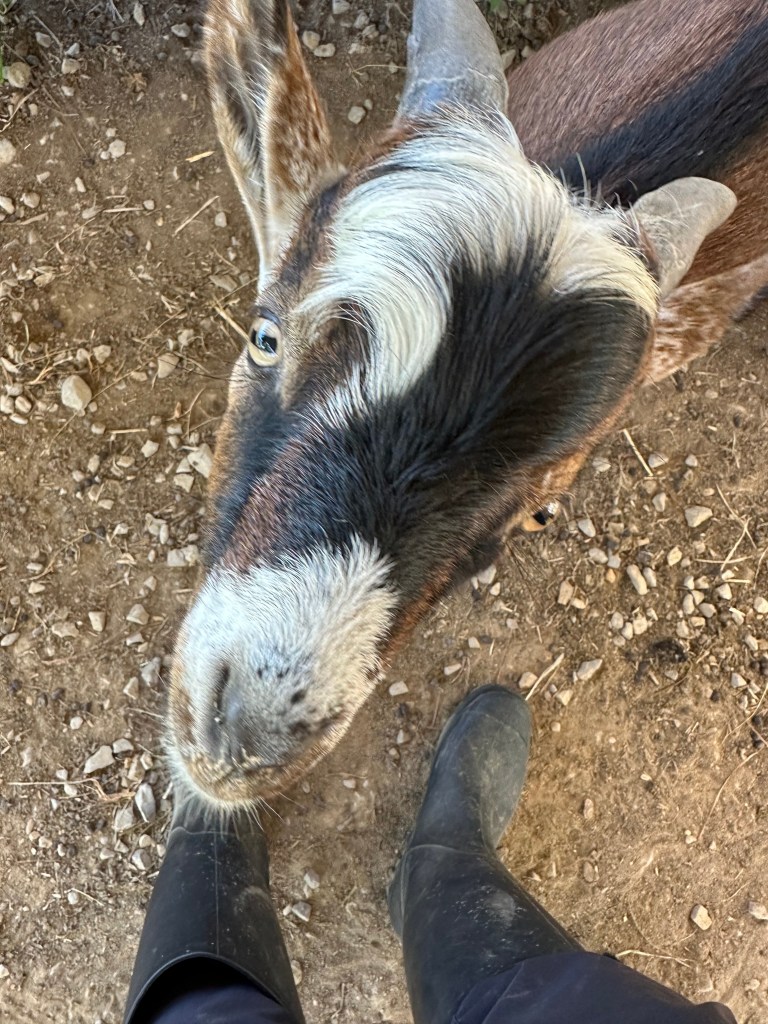
Can Goats LEARN? Our goats used to run to the feeding troughs if they heard the cow bell. This was something they learned like Pavlov’s Dog. They were conditioned to the cow bell. If the goats are in the back field, they still do return when they hear the bell. NOW, the goats have learned something new.
The goats have been “faked” out a few times recently when we used the cow bell to get them back in the fence and did not feed them immediately. Now the goats wait until they actually see someone carrying the orange bucket before they gather around the feeding troughs. So, yes, goats can learn. Goats are still not the “brightest bulb in the box”.
Tomorrow, we will share our wealth of goats with another farmer. Austin wishes to try his hand at goat soap and goat cheese. Hermione, Jelly, Ivanka, Ghost, and Coke Case are all moving to a new home. We will keep you up to date as part of our herd moves to Louisiana. We will even tell you how to buy soap and cheese from Austin when he succeeds in his new endeavor.