


Scientific Tip: Just because it grows in your garden, doesn’t mean it is eatable! Below is a mushroom that was growing under the blackberries in the garden. The mushrooms below are in the family of Argaricaceae (gilled mushrooms). This family has many edible and deadly poisonous mushrooms. NEVER eat or touch a wild mushroom unless you are trained in mushroom identification and know that a mushroom is safe. Many of the deadly mushrooms resemble the edible mushrooms, so SAFE is always better than SORRY! Mushrooms are a good candidate for the “Look, but don’t touch” motto.


Can you identify this colorful bug? I couldn’t either without the help of the internet! This is the Ailanthus Webworm Moth. It looks like a beetle when not in flight. While in flight, it resembles a wasp. It is thought to have been a resident of Costa Rica and South Florida, but is now common in the USA. This moth lays its eggs on the webs of other larvae. This moth’s main food is nectar. Can you identify the proboscis?

Although both the butterfly and the moth belong to the same ORDER (Lepidoptera), butterflies usually fold their wings back while moths flatten their wings to their bodies. Butterfly antenna have a thickened tip or bulb, while moth antenna may be feathered and do not have the bulbous tip. Look closely at the antenna below. Definitely no bulbous tip.

The following pictures are of our watermelon patch. If you look closely, you will see three watermelons in our watermelon patch.


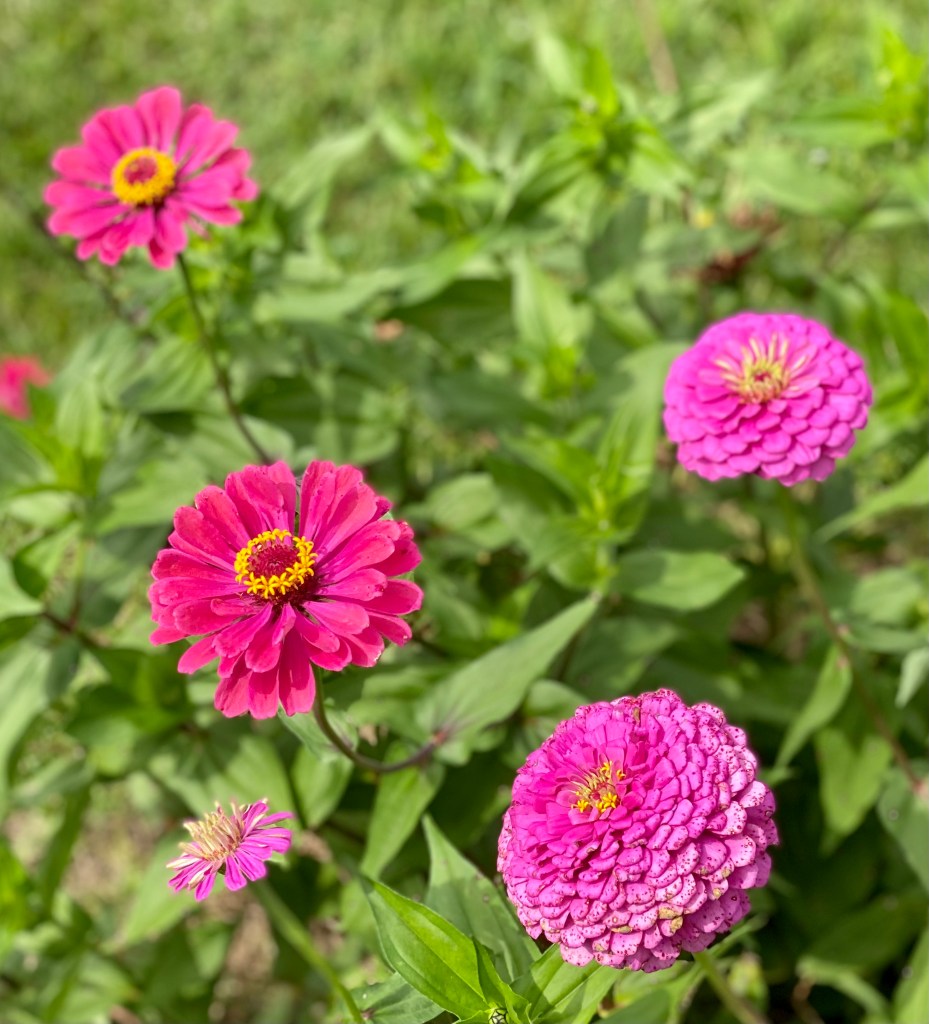
Zinnias will grow anywhere! Look at the volunteer Zinnias, then look at the video of Zinnias from Mercedes.


Below is the close of a beautiful and blessed day with a few bats added!
If you liked this blog, please tell your friends and family. You can also let us know!http://CCPygmygoats.com